
Kiln Dried vs Heat Treated Pallets: Key Differences for Shipping and Storage
Kiln-dried and heat-treated pallets serve different purposes in the supply chain. This article explains the key differences between the two processes, including moisture control, ISPM-15 export compliance, and when each pallet type is best suited for shipping, storage, and product protection.
Understanding the difference between kiln-dried and heat-treated pallets is important for manufacturers, distributors, and warehouses that rely on wood pallets for product protection and transportation. While the two treatments are both important in the pallet industry, they serve very different purposes within the supply chain.
Kiln drying focuses on reducing the moisture content of wood, while heat treatment is designed to eliminate insects and pests for international shipping compliance. Choosing the correct pallet type can affect product protection, storage conditions, and regulatory compliance. Businesses working with a pallet manufacturing company should understand how these treatments affect pallet performance before deciding which option best fits their operations.
Kiln Dried vs Heat Treated Pallets
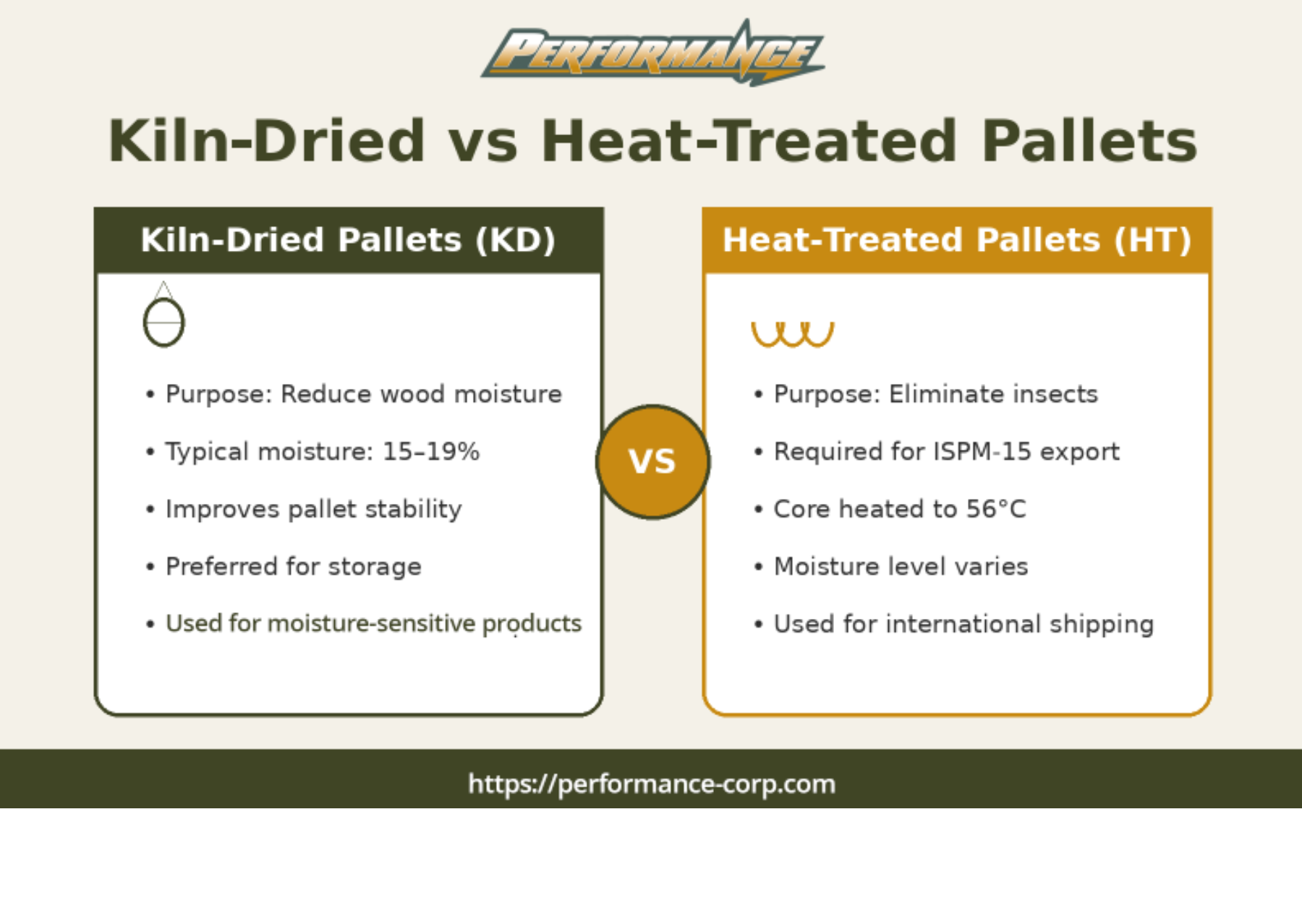 Kiln drying is a controlled process that removes moisture from wood using heated chambers over an extended period of time. The goal is to reduce internal moisture levels so the pallet remains more stable and less susceptible to environmental changes.
Heat treatment is a phytosanitary process required for international shipping under ISPM-15 regulations. The wood must reach a core temperature of 56°C (132.8°F) for at least thirty minutes to eliminate insects and pests that could spread between countries. For official U.S. requirements on heat-treated pallets, see the USDA APHIS Wood Packaging Material guidelines.
Because these treatments address different concerns, one is not automatically better than the other. Instead, the correct choice depends on how the pallet will be used.
How Kiln Drying Works
Kiln drying is a controlled lumber drying process used throughout the wood products industry. Pallet lumber is placed inside a drying kiln where temperature, airflow, and humidity are carefully managed. This process gradually removes moisture from the wood until the desired moisture content is reached, typically between 15% and 19% percent.
Lower moisture levels improve dimensional stability and reduce the likelihood that pallets will warp, twist, or shrink during storage and transportation. Kiln-dried pallets are often preferred in supply chains where moisture control is important, such as food packaging, pharmaceuticals, or long-term warehouse storage. The standard 48×40 GMA pallets are ideal for these applications, providing consistent performance and reliability.
How Heat Treatment Works
Heat treatment focuses on pest elimination rather than moisture control. During the process, pallets are placed in a chamber and heated until the internal wood temperature reaches the level required by ISPM-15 regulations.
Once the required temperature is maintained for thirty minutes, the pallet is considered compliant for export shipping. Heat treatment does not guarantee a specific moisture content. In some cases, pallets may still contain relatively high moisture levels after treatment.
Another factor to consider is that heating wood can mobilize natural sugars within the lumber. When pallets are later exposed to humid environments, those sugars can migrate toward the wood surface and create favorable conditions for fungal growth if moisture is present.
When Should You Use Kiln Dried vs Heat Treated Pallets
The best pallet choice depends largely on how the pallet will be used in your supply chain. Kiln-dried pallets are often preferred when products are sensitive to moisture, pallets will be stored long-term in warehouses, or consistent pallet moisture levels are required for packaging quality. Lower moisture levels also help reduce the risk of wood movement during seasonal humidity changes.
Heat-treated pallets are necessary when shipping products internationally. Export shipments must comply with ISPM-15 regulations designed to prevent the spread of wood-boring insects between countries.
Some pallets can be both kiln dried and heat treated when businesses need moisture control along with export compliance.
Operational Factors That Affect Pallet Performance
One section that many pallet buyers overlook is how operational conditions affect pallet performance after treatment. Even properly processed pallets can behave differently depending on how they are handled within the supply chain. Warehouse ventilation, storage conditions, and pallet rotation all influence long-term pallet stability. Facilities that maintain good airflow and avoid prolonged exposure to humidity generally see fewer pallet performance issues.
Companies that want to understand how storage practices influence pallet condition can review our pallet mold prevention best practices article for additional handling guidance.
Work With Performance Pallet
Choosing the right pallet treatment can improve product protection, reduce supply chain disruptions, and ensure regulatory compliance. Performance Pallet manufactures high-quality wood pallets designed for durability, moisture control, and reliable shipping performance. Call us today to discuss your pallet requirements.
FAQ: Kiln Dried vs Heat Treated Pallets
Are kiln-dried pallets the same as heat-treated pallets
No. Kiln drying reduces the moisture content of wood, while heat treatment eliminates insects and pests required for international shipping compliance. Research from the USDA Forest Products Laboratory highlights how kiln-dried wood contributes to long-term pallet performance and durability.
Which pallets are required for export shipping
Heat-treated pallets are required for international shipments because they meet ISPM-15 phytosanitary regulations.
Do kiln-dried pallets prevent mold?
Reducing wood moisture lowers the likelihood of mold development, but proper storage and ventilation are still important.
Can a pallet be both kiln-dried and heat-treated?
Yes. Some pallets are kiln-dried to reduce moisture and then heat-treated to meet export regulations.