When businesses evaluate pallet racking and warehouse storage solutions, the conversation typically centers around three key factors: space optimization, operational efficiency, and safety. The right racking system can dramatically improve workflow, increase storage capacity, and reduce handling time — all while supporting long-term scalability.
In today’s fast-paced industrial environments, warehouses are expected to store more product, move inventory faster, and operate with tighter margins. A properly designed pallet racking system helps accomplish all three.
Let’s break down the most common pallet racking types, explore their components, and help you determine which storage solution is best suited for your operation.
What is Pallet Racking?
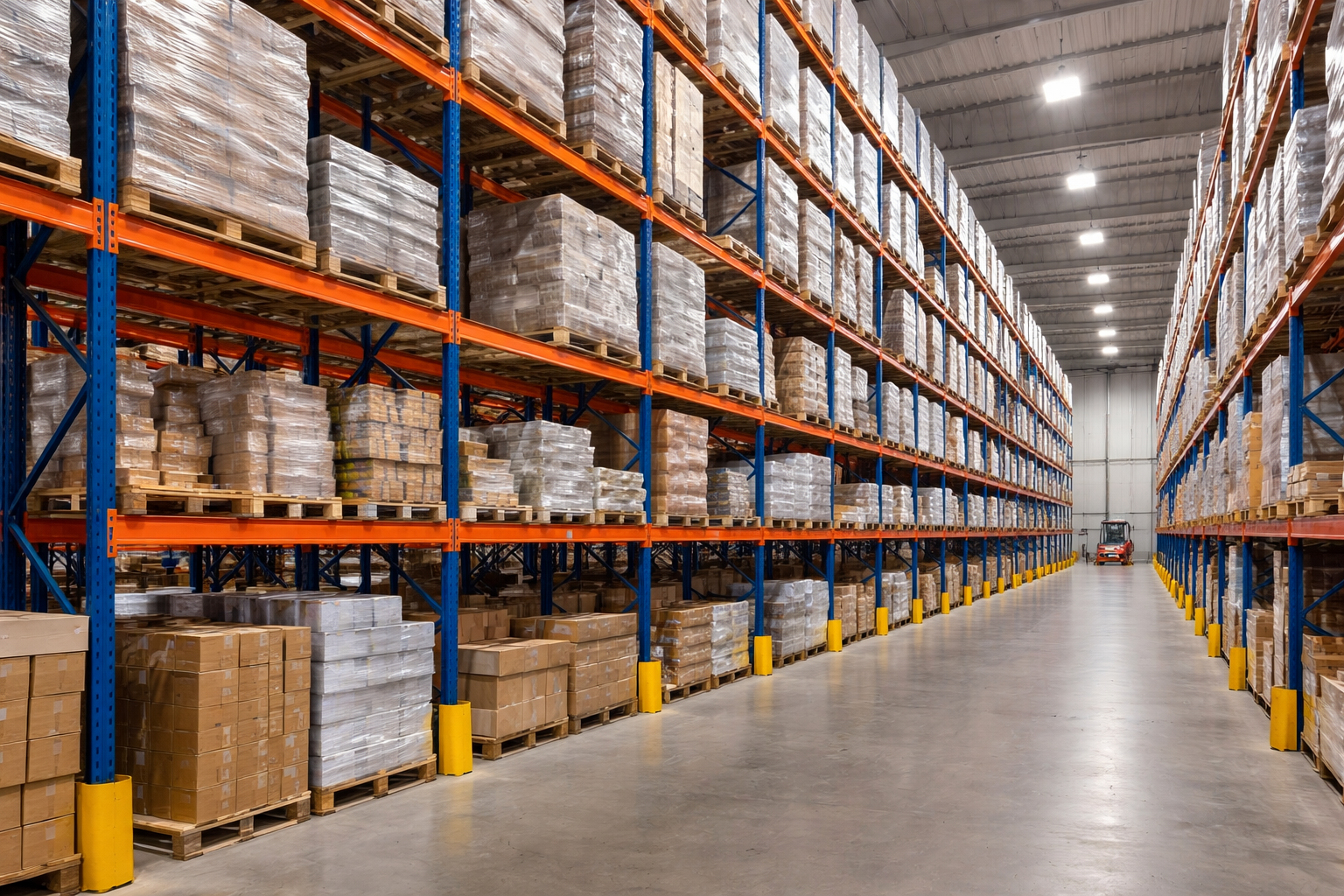
Pallet racking is a material handling storage system designed to store palletized goods in horizontal rows with multiple levels. These systems allow warehouses to utilize vertical space efficiently, increasing storage capacity without expanding the building footprint.
Pallet racking systems are commonly used in:
- Distribution centers
- Manufacturing facilities
- Retail warehouses
- Food and beverage storage
- Cold storage facilities
- Third-party logistics (3PL) operations
By organizing palletized inventory vertically, businesses can streamline picking, improve inventory visibility, and reduce floor clutter.
Common Types of Pallet Racking Systems
Different warehouse operations require different racking configurations. Here are the most widely used systems:
- Selective Pallet Racking
Selective racking is the most common and versatile system in North America. It provides direct access to every pallet, making it ideal for operations with high SKU variety.
Best for:
- Fast-moving inventory
- Warehouses requiring frequent access
- Operations using FIFO (First-In, First-Out)
-
Drive-In / Drive-Through Racking
Drive-in racking allows forklifts to enter the rack structure to load and retrieve pallets. This system increases storage density but reduces selectivity.
Best for:
- High-density storage
- Low SKU variety
- LIFO (Last-In, First-Out) inventory systems
-
Push-Back Racking
Push-back systems use nested carts that move along inclined rails. As a new pallet is loaded, it pushes the previous pallet backward.
Best for:
- Medium-density storage
- Multiple pallets per SKU
- Improved selectivity over drive-in systems
-
Pallet Flow Racking
Also known as gravity flow racking, this system uses rollers to move pallets from the loading side to the picking side automatically.
Best for:
- FIFO inventory management
- High-volume operations
- Food and beverage warehouses
Core Components of a Pallet Racking System
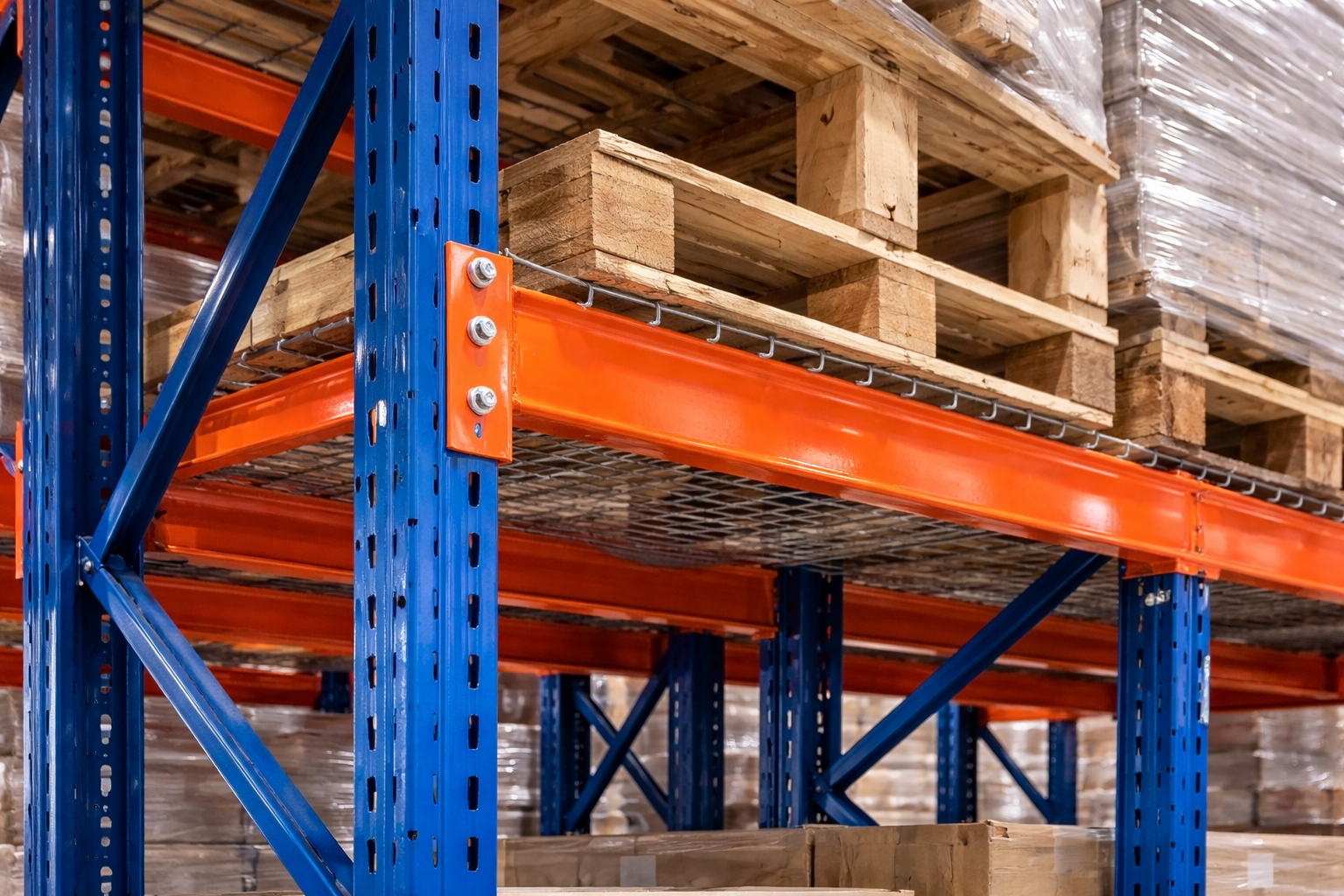
Understanding the structure of pallet racking systems helps ensure proper design and safety compliance.
- Upright Frames – Vertical columns that provide structural support.
- Horizontal Beams – Connect upright frames and support pallet loads.
- Wire Decking or Pallet Supports – Provide additional stability for pallets.
- Base Plates – Anchor the rack system to the warehouse floor.
- Cross Bracing – Reinforces the upright frames for stability.
- Safety Accessories – Rack guards, column protectors, and safety pins.
Each component plays a critical role in maintaining load integrity and warehouse safety.
-
Maximized Vertical Space
Industrial warehouses often underutilize vertical square footage. Pallet racking systems allow businesses to build upward, increasing capacity without expanding floor space.
This leads to:
- Lower real estate costs
- Improved storage density
- Better organization
-
Improved Workflow and Efficiency
Strategic rack layout improves traffic flow for forklifts and employees. Clearly defined storage lanes reduce travel time and speed up order fulfillment.
Benefits include:
- Faster picking times
- Reduced labor costs
- Improved productivity
-
Enhanced Safety
Properly engineered racking systems:
- Distribute load weight evenly
- Reduce product damage
- Minimize floor stacking hazards
- Support OSHA compliance standards
Safety accessories such as rack guards and column protectors further reduce impact damage from forklifts.
-
Scalable and Customizable Solutions
Pallet racking systems can be customized to meet:
- Ceiling height limitations
- Weight capacity requirements
- Inventory turnover rates
- Available warehouse square footage
As your business grows, racking systems can be expanded or reconfigured to meet new demands.
-
Better Inventory Control
Organized pallet storage improves:
- SKU tracking
- FIFO and LIFO management
- Inventory accuracy
- Reduced product loss
Warehouse management systems (WMS) integrate seamlessly with structured racking layouts for real-time inventory visibility.
Choosing the Right Storage Solution for Your Warehouse
The best racking system depends on several operational factors:
- Average pallet weight
- Number of SKUs
- Inventory turnover rate
- Available square footage
- Forklift type and aisle width
- Budget considerations
For example:
- High SKU variety = Selective racking
- High-density storage needs = Drive-in or push-back
- Perishable goods = Pallet flow (FIFO)
A professional warehouse assessment ensures your layout supports both current and future growth.
Safety and Compliance Considerations
Industrial pallet racking must be installed according to engineering specifications and local building codes. Regular inspections are critical to ensure:
- No bent or damaged beams
- Proper anchoring to concrete floors
- Correct load capacity labeling
- Intact safety pins and locking mechanisms
Routine maintenance prevents costly downtime and protects employees and inventory.
Frequently Asked Questions (FAQ)
Q: What is the most common pallet racking system?
Selective pallet racking is the most widely used system because it offers direct access to every pallet and is highly versatile.
Q: How much weight can pallet racking hold?
Weight capacity varies based on beam size, upright strength, and rack configuration. Systems can be engineered to hold thousands of pounds per pallet position.
Q: How do I know which racking system is right for my warehouse?
The ideal system depends on inventory type, SKU count, turnover rate, and available space. A professional warehouse evaluation helps determine the best solution.
Q: Can pallet racking be expanded later?
Yes. Most pallet racking systems are modular and can be expanded or reconfigured as your storage needs grow.
Q: How often should pallet racking be inspected?
Regular visual inspections should occur monthly, with formal safety inspections conducted at least annually or after any forklift impact.
Final Thoughts: Build a Smarter Warehouse with the Right Storage System
Investing in the right pallet racking and storage solutions is more than just organizing inventory — it’s about improving operational efficiency, maximizing warehouse space, and supporting long-term growth.
Whether you need selective racking for flexible access or high-density storage for maximum capacity, a properly designed system can transform your warehouse operations.
If you’re evaluating pallet racking or upgrading your storage layout, we’re here to help. Fill out our Request A Quote (RAQ) form today, and our team will design a customized storage solution tailored to your facility’s needs. Let’s build a safer, more efficient warehouse together.