
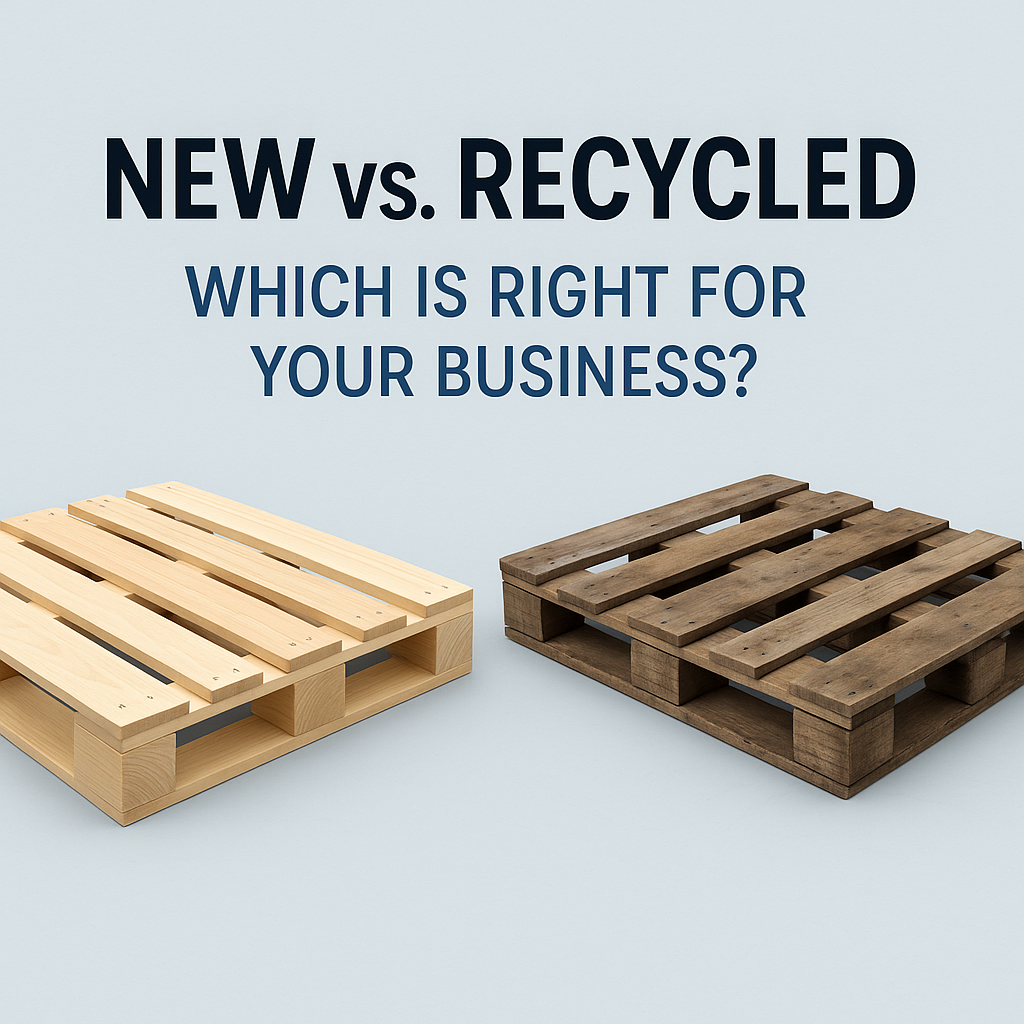
Making the Smart Choice for Your Supply Chain
When it comes to selecting pallets for your business operations, the decision between new and recycled pallets may seem straightforward, but there’s more to consider than meets the eye. From cost and durability to compliance, branding, and sustainability goals, your pallet strategy plays a bigger role in your supply chain than many companies realize.
Whether you’re shipping regionally, nationally, internationally, or handling lightweight consumer goods versus heavy industrial materials, pallets are the literal foundation of your logistics system. Choosing the right type can impact product protection, warehouse efficiency, transportation costs, and even your company’s environmental footprint.
So how do you determine which type of pallet is right for your business? Let’s take a deeper look.
New Pallets: Built for Strength, Precision, and Performance
New pallets are manufactured using fresh lumber and built to precise specifications. Because they haven’t been previously used, they offer uniformity, structural integrity, and compliance with industry standards.
Why Choose New Pallets?
- Customization & Engineering Flexibility
One of the biggest advantages of new pallets is the ability to customize them to your exact needs. Whether you require a non-standard footprint, higher load capacity, specific deck board spacing, or compatibility with automated warehouse systems, new pallets can be engineered to fit your operation.
For companies with specialized packaging, unique racking systems, or automated material handling equipment, precision is critical. A custom pallet can reduce product damage, improve stacking efficiency, and streamline warehouse flow.
- Strength & Durability
New pallets are constructed from fresh-cut lumber, providing consistent strength and long-lasting performance. This makes them ideal for:
- Heavy industrial loads
- High-value products
- Pharmaceutical and food-grade shipments
- Export freight
If your business can’t afford product loss due to pallet failure, investing in new pallets may provide greater peace of mind.
- Regulatory Compliance & Sanitation
If you export goods internationally, compliance is non-negotiable. New pallets can be heat-treated to meet ISPM-15 standards, which regulate wood packaging materials used in global trade. You can learn more about ISPM-15 requirements through the International Plant Protection Convention (IPPC).
Heat treatment prevents the spread of invasive pests and is required for many international shipments.
Additionally, new pallets are less likely to carry debris, contaminants, or prior-use residue. For industries with strict sanitation standards, such as food and beverage or healthcare can be a critical factor.
Recycled Pallets: Sustainable, Cost-Effective, and Practical
Recycled pallets are previously used pallets that have been carefully inspected, repaired, and restored for reuse. When sourced from a reputable provider, recycled pallets offer reliable performance at a lower cost.
Why Choose Recycled Pallets?
- Cost Savings
Recycled pallets typically cost 20% to 40% less than new pallets. For businesses with high pallet turnover, this can translate into substantial annual savings.
If pallets are used for one-way shipping, internal warehouse transfers, or applications where appearance isn’t critical, recycled pallets provide excellent value.
- Environmental Responsibility
Sustainability is becoming a major priority across supply chains. Reusing pallets reduces the demand for virgin lumber and extends the lifecycle of wood materials.
Choosing recycled pallets supports the circular economy and helps reduce landfill waste. Companies focused on ESG (Environmental, Social, and Governance) initiatives often include pallet reuse programs in their sustainability reporting.
For companies committed to responsible forestry practices, sourcing from suppliers that work with SFI-certified (Sustainable Forestry Initiative) loggers can further strengthen environmental commitments. Learn more about SFI standards.
Additionally, businesses participating in sustainability programs like the EPA SmartWay initiative can integrate pallet recycling into broader emissions reduction efforts.
- Availability & Convenience
Recycled pallets are widely available in standard sizes, especially the industry-standard 48×40 pallet. If your operation needs large volumes quickly, recycled pallets often provide faster turnaround times.
For distribution centers, manufacturers, and retail supply chains, availability and affordability often make recycled pallets the practical choice.
Key Factors to Consider Before Making Your Decision
Choosing between new and recycled pallets isn’t just about price, it’s about aligning your pallet strategy with your business objectives.
- Load Requirements
How much weight will the pallet carry? Are you stacking products multiple layers high? Heavy loads may require new pallets or higher-grade recycled options.
- Shipping Destination
International shipments typically require ISPM-15 heat treatment. Domestic shipments may allow for greater flexibility.
- Automation Compatibility
If you operate automated racking or conveyor systems, consistent pallet dimensions and structural integrity are critical.
- Product Sensitivity
Are you shipping food, pharmaceuticals, or high-end retail goods? Cleanliness and appearance may influence your choice.
- Sustainability Goals
If reducing environmental impact is a corporate priority, recycled pallets, or a closed-loop pallet recycling program, may align best with your mission.
Many Businesses Use Both
For many organizations, the smartest strategy isn’t choosing one over the other, it’s using a mix.
For example:
- New pallets for exports or high-value shipments
- Recycled pallets for internal warehouse movement
- Custom pallets for specialized production lines
A diversified pallet program can balance cost efficiency, compliance, and performance.
FAQ: New vs. Recycled Pallets
Q1: Are recycled pallets safe and reliable?
Yes, when sourced from a reputable pallet provider. Recycled pallets are inspected, repaired, and graded to ensure structural integrity before resale.
Q2: Can recycled pallets be heat-treated for export?
Yes. Recycled pallets can be heat-treated and stamped to meet ISPM-15 requirements, provided they meet compliance standards.
Q3: Do new pallets last longer than recycled ones?
Generally, new pallets offer a longer lifespan due to fresh lumber construction. However, high-quality recycled pallets can still deliver strong performance for many applications.
Q4: Which option is better for sustainability?
Recycled pallets typically have a lower environmental impact because they extend the lifecycle of existing materials. However, responsibly sourced new pallets from certified forestry programs also support sustainable practices.
Q5: Are custom pallet sizes available in recycled options?
Custom sizes are more commonly produced with new pallets. Recycled pallets are usually available in standard dimensions.
Q6: How do I determine the right pallet grade?
A pallet professional can evaluate your load weight, stacking configuration, shipping method, and warehouse setup to recommend the appropriate grade or design.
Conclusion: Optimize Your Logistics with the Right Pallet Strategy
In today’s competitive and sustainability-driven supply chain landscape, pallet selection is more than an operational detail, it’s a strategic decision.
New pallets deliver precision, performance, and compliance.
Recycled pallets provide cost savings, sustainability benefits, and wide availability.
The right choice depends on your operational requirements, product type, shipping destination, and long-term goals.
At Performance LLC, we help businesses develop pallet solutions that align with efficiency, compliance, and environmental responsibility. Whether you need high-performance new pallets, eco-conscious recycled options, or a balanced strategy using both, we’re here to help you build a smarter supply chain, one pallet at a time.